
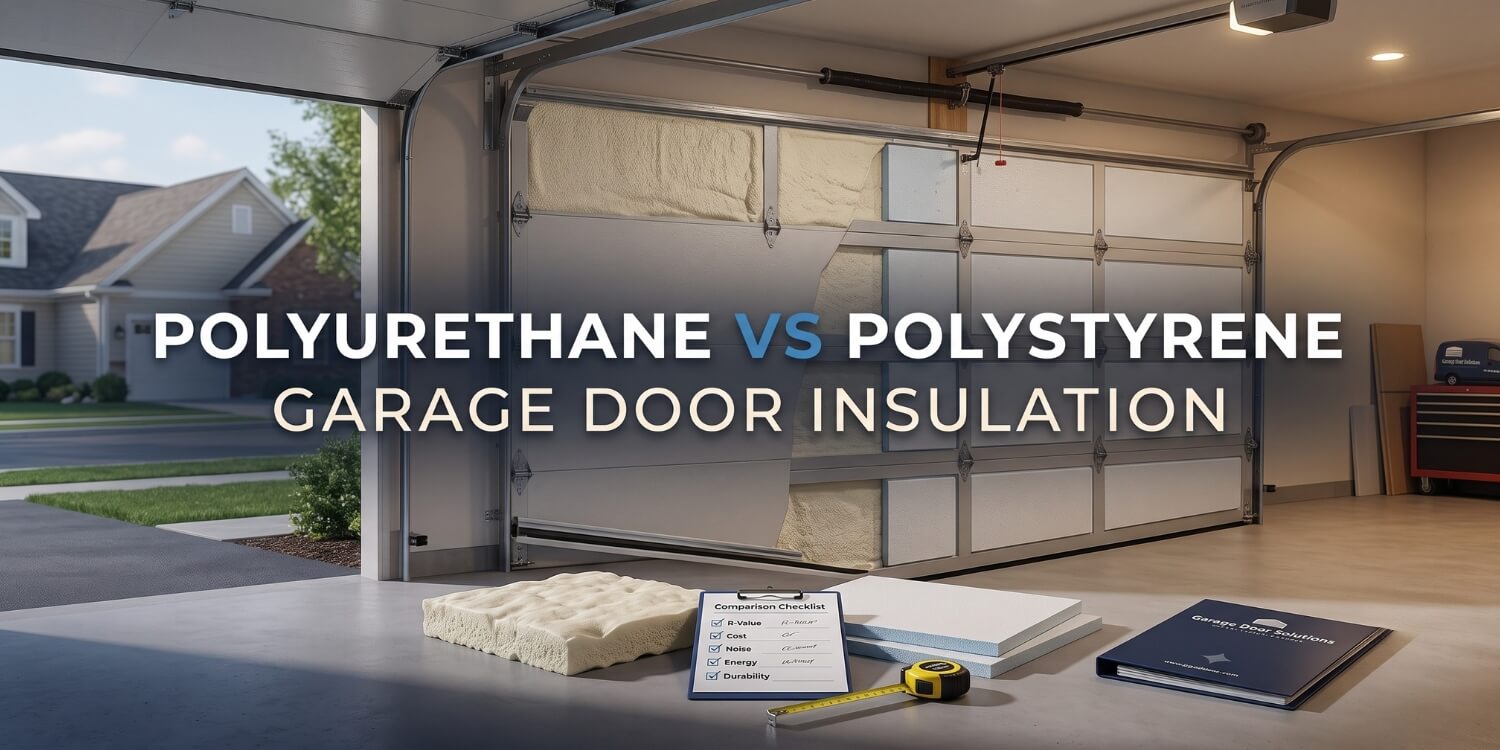
Your garage door plays a crucial role in your home’s comfort, energy efficiency and curb appeal. When choosing garage door insulation, many homeowners compare polyurethane and polystyrene to see which one is the better fit. Both options have their own benefits, depending on what you need. At Garage Door Solutions, we’re here to help you understand the differences so you can choose the right option for your home.
How Do These Materials Differ?
These two popular insulation materials each have unique characteristics that set them apart. Let’s take a closer look at their key differences:
- Polyurethane: Polyurethane is a liquid foam that is injected between the steel layers of your garage door. It expands to create a solid, seamless barrier, providing effective thermal insulation that helps keep your garage comfortable throughout the year.
- Polystyrene: Polystyrene is made of pre-cut foam boards that fit between your garage door panels. Although it doesn’t completely fill every cavity like polyurethane, it still provides reliable insulation and helps maintain a consistent temperature inside your garage.
The Advantages of Choosing Polyurethane
Polyurethane is often considered the premium choice for garage door insulation because of its wide range of benefits. Here’s a closer look at what it offers:
Outstanding Noise Reduction
Polyurethane’s dense structure provides excellent sound-dampening properties. Whether it’s outside noise from traffic or neighborhood activity or sounds coming from a workshop inside the garage, polyurethane helps reduce noise significantly. This makes it an ideal choice for attached garages or garages that are used as living spaces.
Superior R-Value
Polyurethane’s molecular structure creates a highly effective thermal barrier, offering an R-value that typically ranges from R-12 to R-18. This higher insulation rating provides better temperature control throughout the year, making it an excellent choice for homes in extreme climates.
Durability and Longevity
Polyurethane is well known for its durability. As it bonds with the door panels, it creates a strong composite structure that is tougher than the individual materials on their own. This added strength helps prevent panel warping, improves the overall operation of the garage door and leads to fewer maintenance requirements and a longer lifespan.
Enhanced Energy Efficiency
Polyurethane’s seamless barrier helps improve energy efficiency in several ways:
- Eliminates thermal bridging between door panels
- Creates an airtight seal to help block drafts
- Maintains more consistent temperatures during extreme weather
- Reduces strain on your HVAC system which can help lower energy costs
Weather Resistance
Polyurethane’s closed-cell structure acts as an effective moisture barrier, helping prevent issues such as:
- Condensation buildup inside the door panels
- Water absorption that can lead to mold growth
- Corrosion in humid environments
Potential Drawbacks With Polyurethane
While polyurethane offers many benefits, it’s important to consider a few factors before making your decision:
- Professional Installation Required: The foam injection process is complex and requires certified technicians and specialized equipment. Because of the chemical reaction involved, DIY installation is not an option.
- Higher Initial Costs: The specialized manufacturing process and premium materials result in upfront costs that are typically 30% to 40% higher than basic insulation options.
- Environmental Considerations: Some polyurethane formulations contain chemicals that require careful handling during installation. During the curing process, temporary volatile organic compounds (VOCs) may be released and in some regions, end-of-life disposal may require special handling.
The Advantages of Choosing Polystyrene
Polystyrene offers several practical benefits, making it a great choice for many homeowners. Here’s a closer look at its key advantages:
Easy & Quick Installation
Polystyrene is easy to install and does not require specialized equipment or curing time. Technicians can cut the panels to fit custom garage door dimensions and the installation process can typically be completed in less than two hours.
A Lightweight Design
Polystyrene’s lightweight foam panels reduce strain on your garage door hardware, helping to:
- Extend the lifespan of springs and openers
- Improve operational balance for smoother door movement
- Reduce overall maintenance requirements
Impressive Cost-Effectiveness for Different Budgets
Polystyrene is a more budget-friendly insulation option, making it an excellent choice for homeowners who want to balance cost and performance. It provides reliable insulation without the higher upfront investment required by some other materials. For larger projects, bulk purchasing options can also help reduce overall costs.
Moisture Resistance and Minimal Maintenance Requirements
Polystyrene’s closed-cell structure creates a natural moisture barrier that helps prevent water infiltration. It also requires very little maintenance and can be easily cleaned with mild soap and water.
Recyclable Construction for an Eco-Friendly Option
Most polystyrene products are recyclable and their manufacturing process uses less energy than many alternative materials. In addition, leftover or removed material can be repurposed for a variety of other construction applications.
Potential Drawbacks with Polystyrene
Understanding the limitations of polystyrene can help you make a more informed decision:
- Potential Air Gaps: Because of its rigid board design, polystyrene may leave small gaps between panels. These gaps can reduce overall energy efficiency, particularly in climates with significant temperature fluctuations.
- Lower R-Value: Polystyrene typically has an R-value ranging from R-4 to R-9, providing less thermal resistance than polyurethane. As a result, temperature changes may occur more quickly.
- Impact Vulnerability: Due to its brittle nature, polystyrene is more susceptible to cracks and edge chipping. It may not withstand impacts as well as polyurethane which can affect its long-term performance.
So, What’s Better?
Your choice between polyurethane and polystyrene garage door insulation ultimately depends on your specific needs and priorities:
- Budget: Although polyurethane requires a higher upfront investment, its superior energy efficiency and long-term value can help offset the additional cost over time. Polystyrene is a more budget-friendly option for homeowners with lower insulation needs or a smaller budget.
- Temperature Control Needs: If you live in an area with extreme temperatures, polyurethane is the better choice. However, polystyrene also performs well in moderate climates, providing reliable insulation at a lower cost.
- Use Case: If your garage is used as a workspace or an attached living space, polyurethane’s superior thermal resistance and noise reduction may make the higher cost worthwhile. If your garage is mainly used for storage or light everyday use, polystyrene remains a reliable and affordable option.
Transform Your Garage with AGDS Garage Doors
Understanding the differences between polyurethane and polystyrene garage door insulation can help you choose the best option for your home. Our team at Garage Door Solutions is here to guide you through the decision-making process and provide professional installation to ensure your garage door system meets your needs. Whether you choose polyurethane or polystyrene, we have the right solution to improve your home’s comfort and energy efficiency.