
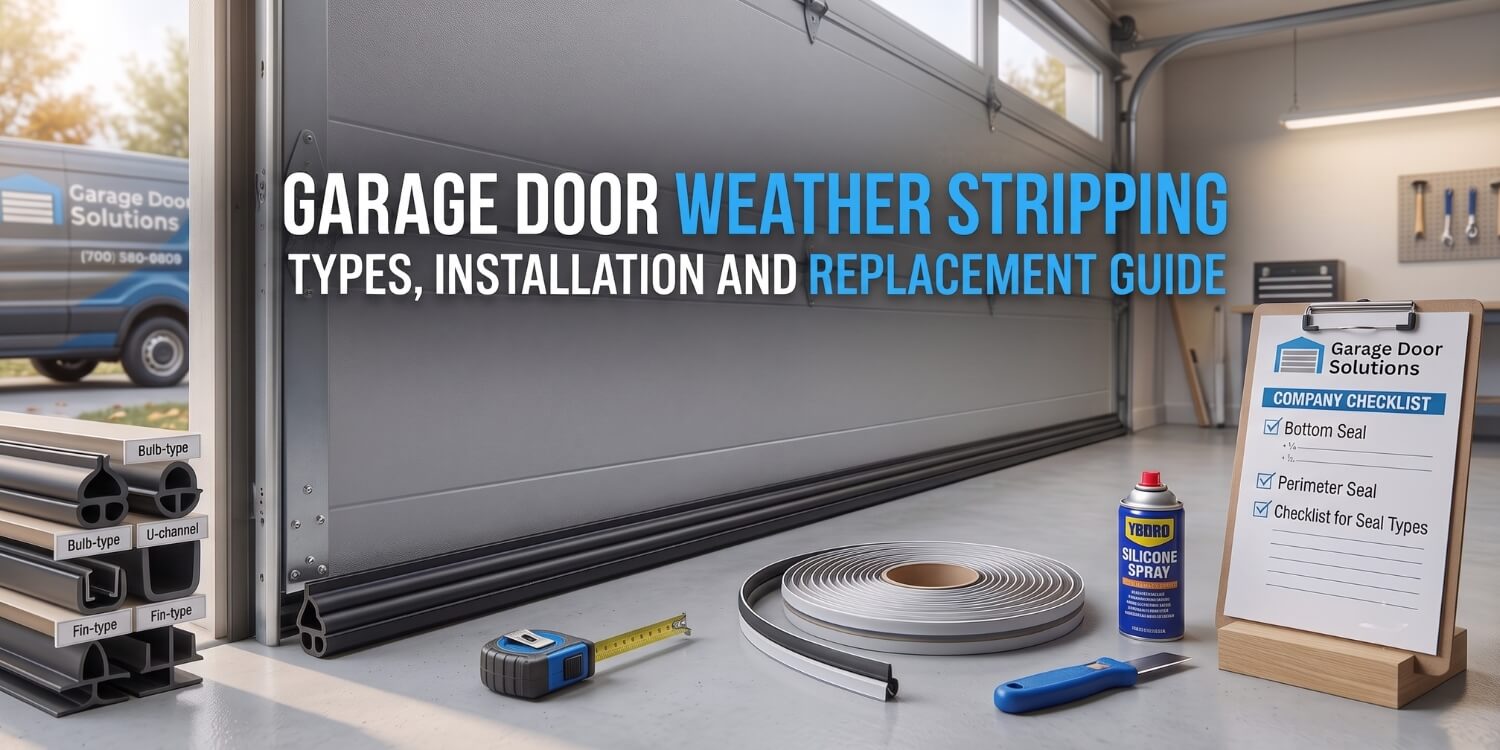
A garage door that isn’t properly sealed can allow drafts, moisture and pests to enter, making your garage uncomfortable and inefficient. Fortunately, garage door weather stripping is an affordable and effective solution to these problems.
This guide will walk you through the basics of garage door weather stripping—what it is, the different types available, how it’s installed and when it should be replaced.
What is Garage Door Weather Stripping?
Garage door weather stripping refers to the materials used to seal the gaps around the edges of your garage door. It’s typically installed along the bottom, sides and top of the door to help prevent outside elements from entering.
Without proper weather stripping, temperature fluctuations and moisture issues can affect not only the garage but also adjacent living spaces, especially in attached garages.
Why is Weather Stripping Important?
Properly installed weather stripping provides several practical benefits:
- Improved temperature control, helping keep the garage more usable year-round
- Lower energy costs by reducing air leakage into the home
- Protection from pests and debris
- Reduced moisture exposure, helping prevent rust and premature door wear
Together, these benefits help improve comfort while protecting your garage door system.
Types of Garage Door Weather Stripping
There are different types of weather stripping, each designed to serve a specific purpose. Let’s take a look at the most common options for your garage door.
|
Type |
Description | Advantages |
Limitations |
|
Bottom Seals |
The bottom seal is the most common type of weather stripping and plays a crucial role in keeping cold air, dirt and moisture out of your garage. Made from rubber or vinyl, these seals are attached to the bottom of the door to fill the gap between the door and the garage floor. |
|
May wear out over time due to constant exposure to the elements |
|
Perimeter Seals |
Perimeter seals run along the sides and top of your garage door. They help prevent cold air, dust and insects from entering through the edges. Typically made from foam or rubber, these seals provide a tight barrier. |
|
May not be as effective on older doors with misaligned tracks |
|
Thresholds and Gaskets |
Garage door thresholds are installed on the garage floor at the bottom of the door, often alongside bottom seals. They create a tighter seal, especially in areas that experience heavy rain or snow. Gaskets are another option for sealing gaps along the bottom or sides of the door. |
|
Installation can be a bit more involved |
How to Install Garage Door Weather Stripping
Sealing your garage door is a relatively simple process but it requires careful attention to detail to ensure a tight seal. Here’s a step-by-step guide to help you complete the job.
Tools You’ll Need:
- Measuring tape
- Scissors or utility knife
- Screwdriver (if needed)
- Weather stripping materials (rubber, vinyl, foam, etc.)
Step-by-Step Installation
- Measure Your Garage Door: Before purchasing weather stripping, measure the length of your garage door to ensure you buy enough material. Be sure to include the top, bottom and sides in your measurements.
- Remove Old Weather Stripping: If your garage door has old, worn-out weather stripping, carefully remove it. If it’s stuck or glued in place, use a scraper to remove any remaining residue and make sure the surface is clean before installing the new stripping.
- Cut the New Stripping: Cut the new weather stripping to match the length of your garage door. Leave a little extra length on both sides to ensure a snug fit.
- Install the Bottom Seal: Attach the bottom seal along the bottom edge of the garage door. If you’re using a vinyl or rubber seal, it should snap into the provided groove. If you’re installing a threshold seal, position it on the floor where the door meets the ground.
- Apply Perimeter Seals: Attach the side and top seals along the edges of the garage door. Some seals have adhesive backing, while others may need to be nailed or screwed into place.
- Test the Seal: Close the garage door and inspect the seals. Make sure there are no gaps and that the seal fits tightly. Adjust as needed.
Common Mistakes to Avoid
- Choosing a seal that isn’t suitable for your local weather
- Installing new weather stripping without cleaning the garage door first
- Not measuring carefully which can lead to gaps or improperly fitted materials
When to Replace Your Garage Door Weather Stripping
Over time, garage door weather stripping can wear out and become less effective. Here are some signs that it may be time to replace it:
- You can see light coming through the bottom or sides when the garage door is closed.
- You feel a draft near the door, even on a calm day.
- The seal feels brittle, cracked or starts to crumble when touched.
- Water collects under the door after rain or snow makes its way into the garage.
- Dust and dirt build up in your garage more quickly than usual.
- Your energy bills increase unexpectedly and your home feels drafty.
If you notice even one of these signs, your weather stripping is no longer performing as it should and it may be time for a replacement.
How to Maintain Your Garage Door Weather Stripping
Regular maintenance can help extend the life of your weather stripping and keep it performing effectively. Here are a few simple tips:
- Inspect Regularly: Check the seals for signs of damage or wear, and replace them when needed.
- Clean the Seals: Keep the weather stripping clean to prevent dirt and debris from building up and damaging the material.
- Lubricate the Seals: Apply a small amount of silicone spray or lubricant to help keep the seals flexible and reduce the risk of cracking.
When to Call a Professional
While installing garage door weather stripping is a fairly simple DIY project, there are situations where calling a professional is the better option. If your garage door is difficult to open or close, the weather stripping may not be the cause of the problem. In these cases, it’s best to contact a Garage Door Solutions Authorized Dealer for a proper inspection.
A Garage Door Solutions certified technician will inspect your entire garage door system, including the door alignment, track condition, opener function and seal compatibility. They will also recommend the materials best suited to your climate and garage door, and ensure the weather stripping is installed correctly.
The Bottom Line
Garage door weather stripping may seem like a small detail but it plays an important role in protecting your home. When the seals wear out, energy is lost, moisture can get in and overall comfort is reduced. Replacing worn weather stripping isn’t just a maintenance task—it’s an upgrade. To make sure the job is done properly, consult a Garage Door Solutions professional to help keep your garage quieter, more energy-efficient and better protected from the elements.
Ready to Upgrade Your Garage Door Weather Stripping?
Don’t let cold drafts or high energy bills affect your garage. Contact a local Garage Door Solutions Authorized Dealer near you. They can help you find the right solution and ensure expert installation for long-lasting performance.