
When updating or replacing a garage door, one question often comes up: what is the average garage door size? It’s a practical detail to consider when planning renovations or buying a new home. Whether you need to fit a single car, a pair of SUVs or want extra space for storage, knowing the common garage door sizes can make the process easier and help you avoid costly mistakes.
While garage door sizes aren’t one-size-fits-all, there are standard options that suit most residential needs. These guidelines have made shopping for a new door easier but it’s still helpful to know what’s typical and what may work best for your home. Throughout this guide, we’ll look at the most common garage door sizes, what “standard” really means and how to measure for the right fit.
Standard Garage Door Width and Height
When people talk about “standard” garage door sizes, they mean the dimensions that fit most homes and vehicles across the country. These measurements aren’t random—they’ve been shaped over decades by building trends, vehicle sizes and homeowner needs. Choosing a door that follows these standards often makes installation easier. Still, there’s some flexibility and understanding the full range of options can help you find the best fit.
Standard Single Garage Door Size
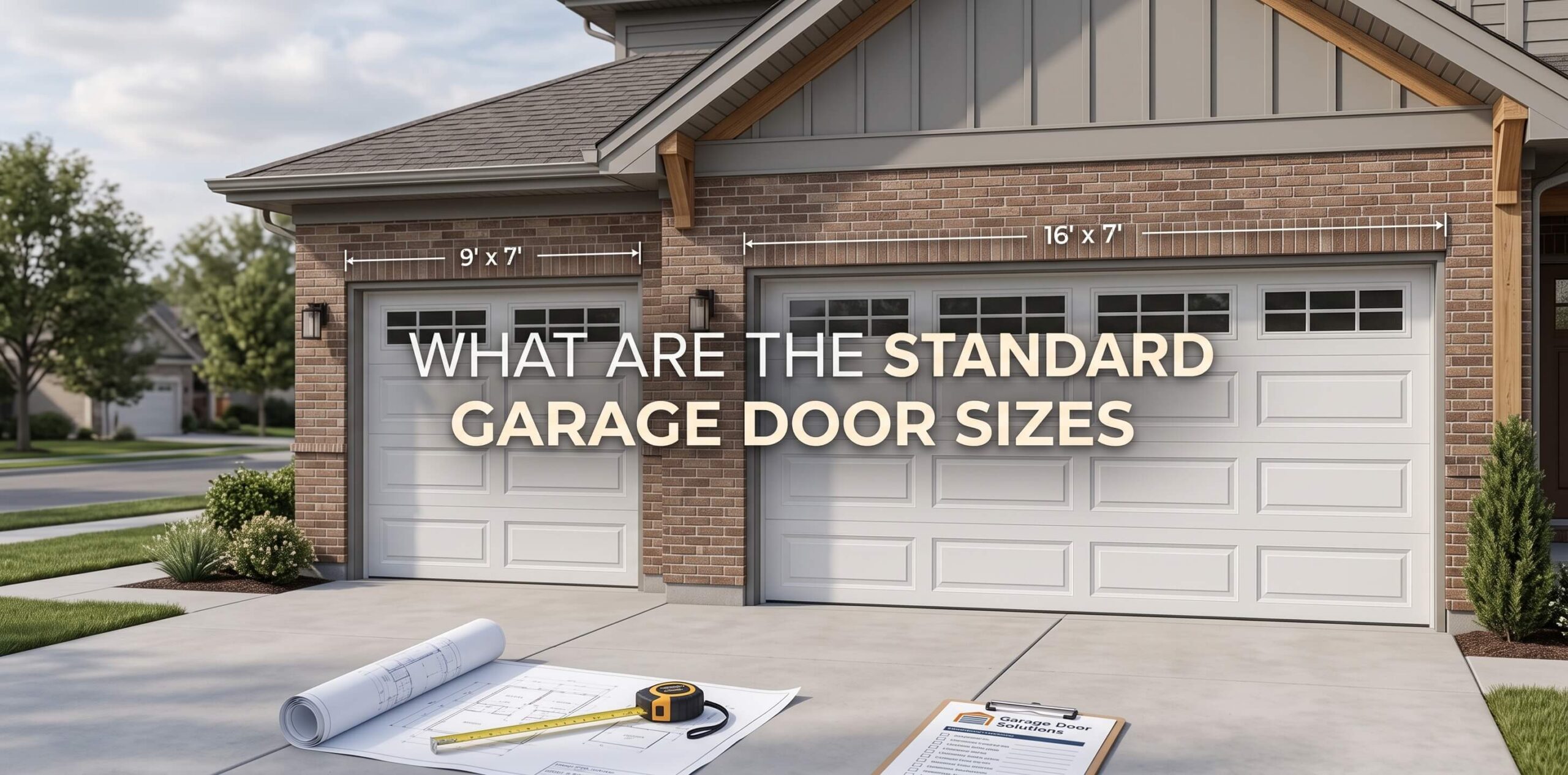
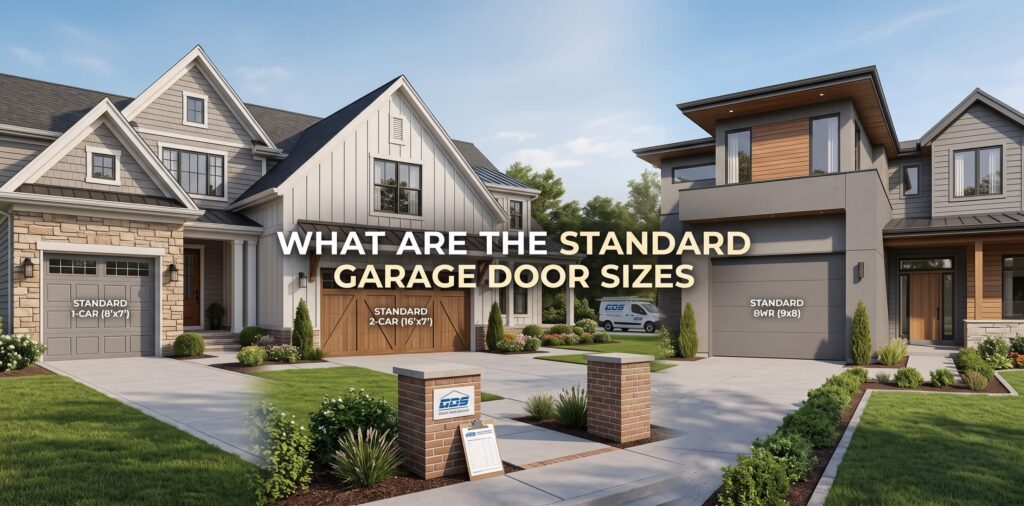
Most single-car garages use sizes that have proven practical over time. The two most common sizes are 8 feet wide by 7 feet high and 9 feet wide by 7 feet high. These standard garage door sizes are designed to comfortably fit a single passenger vehicle, with some extra room for storage or opening car doors. In newer homes, the 9-foot width is popular because it offers a little more clearance, making parking and unloading easier.
Standard Double Garage Door Size
If you have a two-car garage, you’ll often be looking at a standard double garage door size. The classic measurement is 16 feet wide by 7 feet high. This size gives two vehicles enough room to park side by side without feeling cramped and it has become a common choice for many suburban homes. You’ll also find some homes with slightly wider or taller doors but 16 by 7 feet remains the standard baseline for double doors in residential garages.
Common Garage Door Heights and Widths
While 7 feet is the standard height for most residential garage doors, 8-foot-tall doors are also widely available. The extra height can be a smart choice if you drive a larger SUV or truck, or if you want to store items like roof racks or bikes on top of your car. If you have a camper or oversized vehicle, taller doors—sometimes 9 or even 10 feet high—are also an option, though they are less common and often require special ordering.
Width can vary, too. Single doors can range from 8 to 10 feet wide, while double doors typically range from 12 to 18 feet wide. The key is to match the size of a garage door to your actual needs, considering the vehicles you drive now and what you might own in the future.
How to Measure
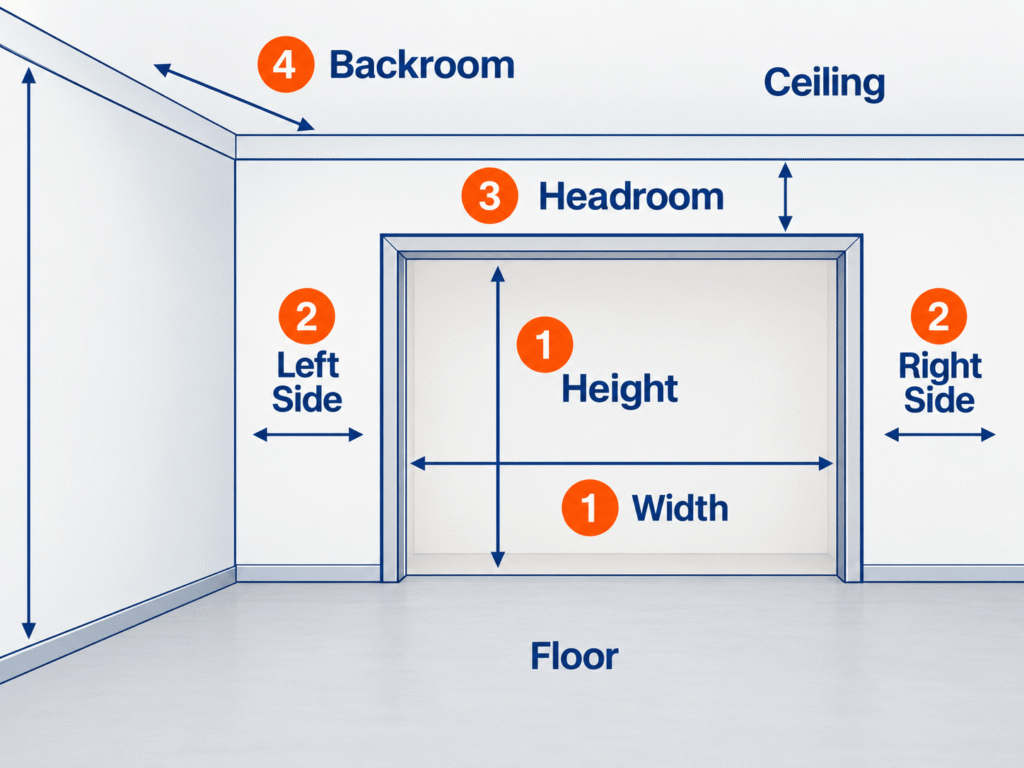
Follow these instructions to measure your existing garage door and record the measurements in feet and inches. Then, take these measurements to your local installing dealer or retailer to purchase the garage door that is right for you.
Height and Width
The rough opening is the height and width of the framed opening, not including the stop molding. The rough opening should be the same size as the door.
Left and Right Side Room
Side room is the space needed on each side of the door to install the vertical track assembly.
- At least 3-3/4″ of space is needed on each side of the door for a standard extension spring, standard torsion spring or EZ-SET® Torsion Spring system.
- At least 4-1/2″ of space is needed above the opening for a standard torsion spring or EZ-SET® Torsion Spring system attachment.
Headroom
Headroom is the space needed above the door for the door, overhead tracks and springs. This area should be clear of any obstructions.
The space from the top of the door opening to the ceiling or floor joist should be:
- At least 10″ for extension springs
- At least 12″ for torsion springs
Note: if there is restricted headroom, low headroom options are available.
Backroom
Backroom is the space needed from the garage door opening to the back wall of the garage. The minimum space should be the height of the door plus 18″.
Custom Garage Door Sizes
Not every garage is built to standard sizes. Older homes, unique architectural designs or special vehicle storage needs may require something different. Whether you need an extra-wide door for a workshop, a taller opening for an RV or a non-standard size to fit an unusual opening, customization options are available.
Double Garage Door Size
The standard double garage door size is 16 feet wide by 7 feet high. This size gives you enough room to park two cars side by side, open the doors comfortably and still leave some extra space for bikes or lawn equipment.
Of course, not every garage is built the same. Some homeowners choose wider double doors, up to 18 feet wide. The height can also be adjusted. While 7 feet is the standard, 8-foot-tall doors are becoming more common. Taller doors, 9 feet or more, are available for lifted vehicles, roof racks or for anyone who wants extra clearance for storage shelves or sports gear hanging from the ceiling.
What Size Cars Fit in a Double Garage Door?
A standard double garage door size—16 feet wide by 7 feet high—can comfortably fit two average sedans, crossovers or smaller SUVs. If you have two full-size trucks or larger SUVs, the 16-foot width can still work but parking may require a little more care.
If you’re parking just one car but want plenty of space for storage, a double door can also be a good option. Ultimately, the right fit depends on your vehicles, your storage needs and how you use your garage day to day.
Less Common Garage Door Sizes and Custom Options
While most homes use standard garage door sizes, there are many situations where something a little different is needed. Maybe you have a boat or a workbench that takes up extra space. Maybe your garage is part of a historic property or you’re working with a unique architectural design. In these cases, less common garage door sizes—or even a fully custom door—can be the perfect solution.
When Are Less Common Sizes Needed?
It’s not unusual to see doors that are 10, 12 or even 14 feet tall if you have an RV or oversized vehicles. Garages with high ceilings, or homes that use the garage as an entertaining space, may have extra-wide doors—sometimes up to 20 feet. These sizes go well beyond typical residential options but they’re available through special order and are becoming more popular as homeowners look for more flexibility.
Custom-Sized Garage Doors
If your opening doesn’t match standard measurements, custom garage doors are an option. Garage Door Solutions offers a range of custom sizes for residential projects, whether you need a door that’s a few inches taller, extra-wide or made to fit an unusual shape.
Custom doors are also a great way to match the look and proportions of your home’s architecture. If you’re restoring an older house or building something one-of-a-kind, a custom garage door can help everything look seamless.
Benefits and Drawbacks of Custom Garage Doors
There are a few things to keep in mind when choosing custom garage doors. On the plus side, you get a door that fits perfectly, meets your vehicle and storage needs and matches your home’s style. On the downside, custom doors usually cost more than standard options and you may have to wait a little longer for manufacturing and delivery.
Accurate measurements are necessary for a custom garage door, along with noting any irregular features—like angled ceilings or unusual framing—that could affect the fit. It’s always a good idea to consult with a Garage Door Solutions dealer or installer for help with measurements and to discuss your options. That way, you can be confident that your custom door will fit and operate exactly as it should.
Garage Door Considerations
Before choosing a garage door size, it’s helpful to think about what you need now and what may change in the future. Try to keep these things in mind and plan ahead for:
- Your Vehicle Size: If you drive a compact car, a standard single garage door size will likely work well. But if you own a full-size truck, SUV or plan to upgrade to a larger vehicle in the future, it’s smart to consider a wider or taller door. Extra clearance makes parking easier and reduces the risk of accidental scrapes or dings.
- Storage Space: If you need extra storage, a larger door can make a real difference. It makes it easier to move bulky items in and out, and lets you use the available space without worrying about squeezing through a narrow opening.
- Local Building Codes: Before making any decisions, check your local building codes and homeowners’ association guidelines. Some areas have specific requirements for garage door sizes, especially in historic neighborhoods or flood zones.
- Resale Value: Buyers often look for homes with garages that can fit their vehicles and provide enough storage. A garage that feels cramped or can’t fit today’s larger cars may be a drawback for some buyers. On the other hand, a generously sized garage door offers more flexibility and convenience. Choosing a more spacious double garage door size can be a smart investment that appeals to a wider range of buyers.
Where to Buy Your New Garage Door
Getting the size right is important, which is why it’s a good idea to consult with a professional. Garage Door Solutions dealers have the experience and tools to measure your opening accurately, taking into account headroom, side clearance and any special structural details. Relying on a dealer’s measurements can help you avoid costly mistakes and make sure your garage door installation goes smoothly from start to finish. If you’re unsure what size you need or if your project is a little unusual, don’t hesitate to ask the professionals for guidance.
For example, maybe you’re replacing a door on an older home with non-standard measurements. A Garage Door Solutions dealer can visit your home, take accurate measurements and guide you through the custom ordering process so there are no surprises on installation day. Or let’s say you’re building a new home and want a modern look—they can show you the latest designs, explain insulation options and answer questions about security or smart technology.
Serving customers across Illinois, Garage Door Solutions has qualified professionals ready to help whether you’re just browsing, need a quote or want full-service installation.